

Nepal: Ministry of Finance approves PPP model for GBIA

Ministry of Finance has approved public-private partnership (PPP) model to operate in under construction airport, Gautam Buddha International Airport (GBIA) in Bhairahawa.

After the approval of Finance ministry on this PPP model on last Friday, the uncertainty about the GBIA to come into operation has been cleared and the construction work is about to be completed. Ministry of Culture, Tourism and Civil Aviation (MoCTCA) sent proposal to Finance Ministry to operate GBIA in PPP model 6 months ago.

Rabindra Adhikari, Tourism Minister stated that Finance Minister has approved PPP model for the airport operation. Adhikari also informed that after completing construction work, the Letter of Intent (LoI) will be asked from the interested company.

The construction work of the airport has speeded up aiming to come into operation on June month in 2019. Minister Adhikari said that CAAN will operate the airport for a period of time until the completion of PPP Model processes.

In the first phase, Ministry has been preparing to commence the process of operating GBIA by the government of the concerned countries under G to G (Government to Government).

Minister Adhikari said that G to G will be discussed in the first phase and if no interest is given then letter will be demand and the airport would be operated in PPP model. Since the functional management of the authority cannot operate the airport, Minister Adhikari said that there is no alternative way than to go to PPP model.

The distribution of profit between operator and Nepal Government will be discussed after receiving application form and according to that proposal will be prepared.

Europe, America, India and various companies showed interest for taking responsibilities for operation. Thailand, China, India, Sri Lanka, Malaysia and other countries have shown interests in conducting scheduled flights at GBIA.

The runway of the airport will be 3,000 meters long. The Construction work of terminal buildings, water tanks, and control towers, among other infrastructures, are also underway of construction.

CAAN awarded the Rs6.22-billion Gautam Buddha Airport upgradation contract to China’s Northwest Civil Aviation Airport Construction Group in November 2013. The airport was initially slated to be ready in December 2017.

Of the total project cost, the ADB has provided $58.50 million ($42.75 in loans and $15.75 million in grants), the Opec Fund for International Development (OFID) has provided a $15 million loan and CAAN will bear the rest of the cost as counterpart funding.

However, shortages of fuel and building materials due to the months-long Tarai banda in 2015 delayed the up-gradation works by six months, and its operation deadline was revised to June 2018.

Subsequently, a dispute over payments between the Chinese contractor and the Nepali sub-contractor Northwest Infra Nepal stalled works at the construction site for more than six months. As a result, the project deadline was extended many times. The last deadline given by the project financier ADB to the Chinese contractor is June 2019.

Lumbini is 22km from Gautam Buddha International Airport at Bhairahawa. The airport will also become Nepal’s second international airport and also serve as an alternate international air transport point in the event of poor weather conditions or in case natural calamity shuts down the Tribhuvan International Airport (TIA), the only international airport in the country.

Source:  Aviation Nepal

Greece: Regional airports set for takeoff

The 14 regional airports across Greece that the German-led Fraport Greece group operates are showing significant prospects for their commercial development, such as the opening of more stores and food service points, given that the rise in passenger numbers and improvement of services at the terminals is convincing more companies to invest in them.

According to Giorgos Vilos, Fraport Greece’s commercial and corporate development director, the total area of commercial spaces for concession at the 14 terminals is expected to triple from 11,500 square meters today to some 33,000 sq.m. upon the completion of the ongoing investment program.

Almost half that (16,000-17,000 sq.m.) will concern new food service outlets, while 15,500 sq.m. will be covered by retail stores.

“Our objective is to enhance the variety of choices in all airports, both in food service and in consumption,” Vilos says.

A case in point is the recent agreement with US fast-food chain Burger King, which launched its first outlet in Greece at Rhodes Airport three months ago.

Of the 15,500 sq.m. available for stores, 12,000 sq.m. will be occupied by Hellenic Duty Free Shops, which parent company Dufry has agreed to expand from the existing 5,000 sq.m. The expansion is set to be completed in 2021.

At the 14 regional airports Fraport operates, five new terminals will be created and another five will be significantly expanded.

The total area of 200,000 sq.m. that they cover today will grow to 330,000 sq.m. when the works finish.

The biggest expansion concerns the largest of the 14 airports, Thessaloniki’s: From an existing area of 27,000 sq.m., Makedonia Airport is set to grow to 60,000 sq.m. The new terminal will be delivered by end-2020.

The terminal on Santorini is scheduled to triple in size, from 4,500 sq.m. to 15,600 sq.m.

Vilos said that Fraport Greece will invest a total of 1.25 billion euros over the course of the concession contract’s period, while state revenues will reach up to 10 billion.

Source: Ekathimerini.com

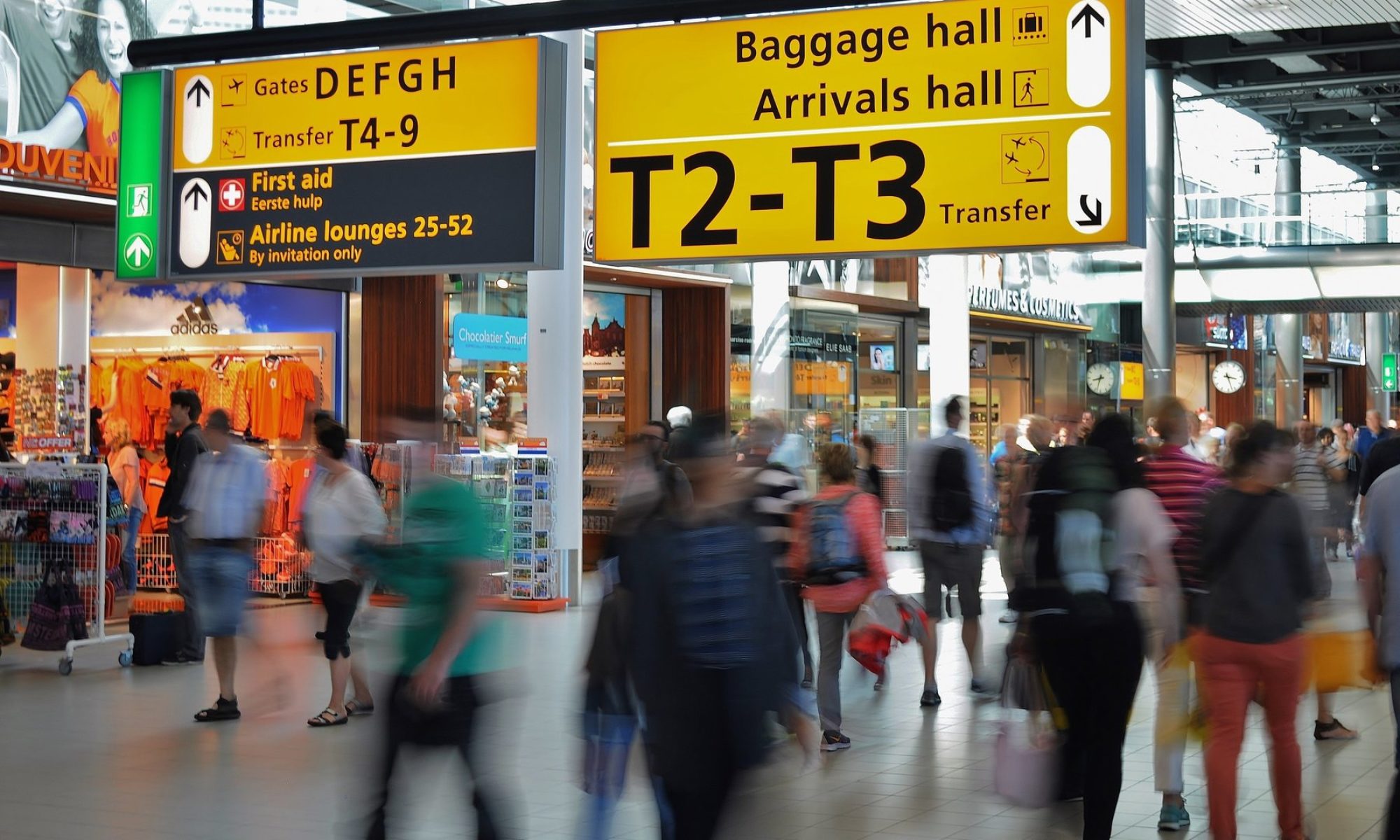
Amsterdam Schiphol expansion proposed as Lelystad delayed

Amsterdam Schiphol airport in the Netherlands needs to find creative ways to cope with capacity issues and is hoping further expansion could give it breathing space as it awaits the opening of Lelystad as a sister airport.

Proposals to develop Lelystad, some 30 miles east of the city, into a commercial airport to handle Schiphol’s low-cost and leisure flights have been delayed to 2020 instead of next year to allow more time to consult with users and local residents.

In the short term, this gives Schiphol a headache. Despite operating six runways, with slots limited to 500,000 per year, the airport is already maxed out and has been negotiating limits on various types of operations.

Recently, a restriction on the number of morning wide-body aircraft operations has been introduced due to a lack of available gates at the terminal’s piers during this period. Until the new pier and terminal extension opens (progressively between 2019 and 2023) there will be little let-up for an airport which has experienced continual growth in passenger numbers — as much as 9.6 percent in 2016.

Radical proposals have looked into the possibility of expanding Schiphol into the North Sea. With the creation of a new offshore runway, remote boarding and light-rail link between the sites, it would allow noisier runways on the current site to be closed down.

Schiphol has been conscious of its need to be a good neighbor. Local residents have recently taken the airport to court over failings to manage the situation and violations in policy.

Yet residents understand the importance of the airport to the country’s economy. In a comment to Dutch News, researcher Eef Haverkort of the Schiphol area residents’ group said, «Air traffic will continue to grow. A ban on further growth of Schiphol is not realistic because of the airport’s great economic significance to the Dutch economy.»

This week the Netherlands’ Ministry of Transport has confirmed it will be discussing the expansion «seawards» in a study to be finalized in January 2019.

However, it seems that in this case it does not necessarily mean building into the sea which, after all, is 10 miles away at its nearest point. Instead, it would see the airport’s footprint grow to the west — an area which is the least problematic overall.

To expand north, south or east would mean negotiating protected forest and agricultural land, which is in short supply in the country, as well as busy arterial roads linking Amsterdam with the airport and parts of the city’s suburbs.

Ultimately, demand on Schiphol as one of Europe’s major airports will continue to grow and capacity will be reached again, owing to its popularity among travelers and the success of national carrier KLM. The introduction of commercial services to Lelystad as a second airport for Amsterdam is still a vital move in taking some of that pressure away and cannot come soon enough.

Source: Multibrief Exclusive

Kenya launches project to upgrade Mombasa airport

Kenya has embarked on a project to refurbish and upgrade the country’s second largest airport to attract more international flights.

James Macharia, cabinet secretary at the ministry of transport, said Tuesday the 7 billion shilling (about 69 million U.S. dollars) project at the Moi International Airport in Mombasa will be undertaken for 24 months.

«It is therefore of paramount importance that we continue to invest in this airport to make sure that it maintains its excellent safety record, and to enhance the efficiency of its operations,» Macharia said in Mombasa during the commissioning of the project.

Macharia said the works include rehabilitation of the entire runway pavements, reconstruction of some sections of the taxiways and aprons, replacement of pre-cast concrete slabs and installation of an elaborate lighting system.

Other works include drainage works improvement, slope and ground stabilization.

The average lifespan of a runway is 20 to 25 years and the last major rehabilitation was done in 1994.

Kenya Airports Managing Director Jonny Andersen said the infrastructural projects will boost passenger numbers.

French development agency AFD will provide 65 million dollars for the project; the World Bank provided 900,000 dollars for the project’s consultancy services; Kenya Airports Authority will cover the balance.

The airport is serving the coastal area and is the principal port of entry for tourists, business travelers and others visiting the region, both from within and without the country.

According to Macharia, the capacity of the airport is over 2 million people but currently it only handles 300,000 people. The upgrade will enable the airport to operate at its maximum capacity.

Source: Xinhuanet