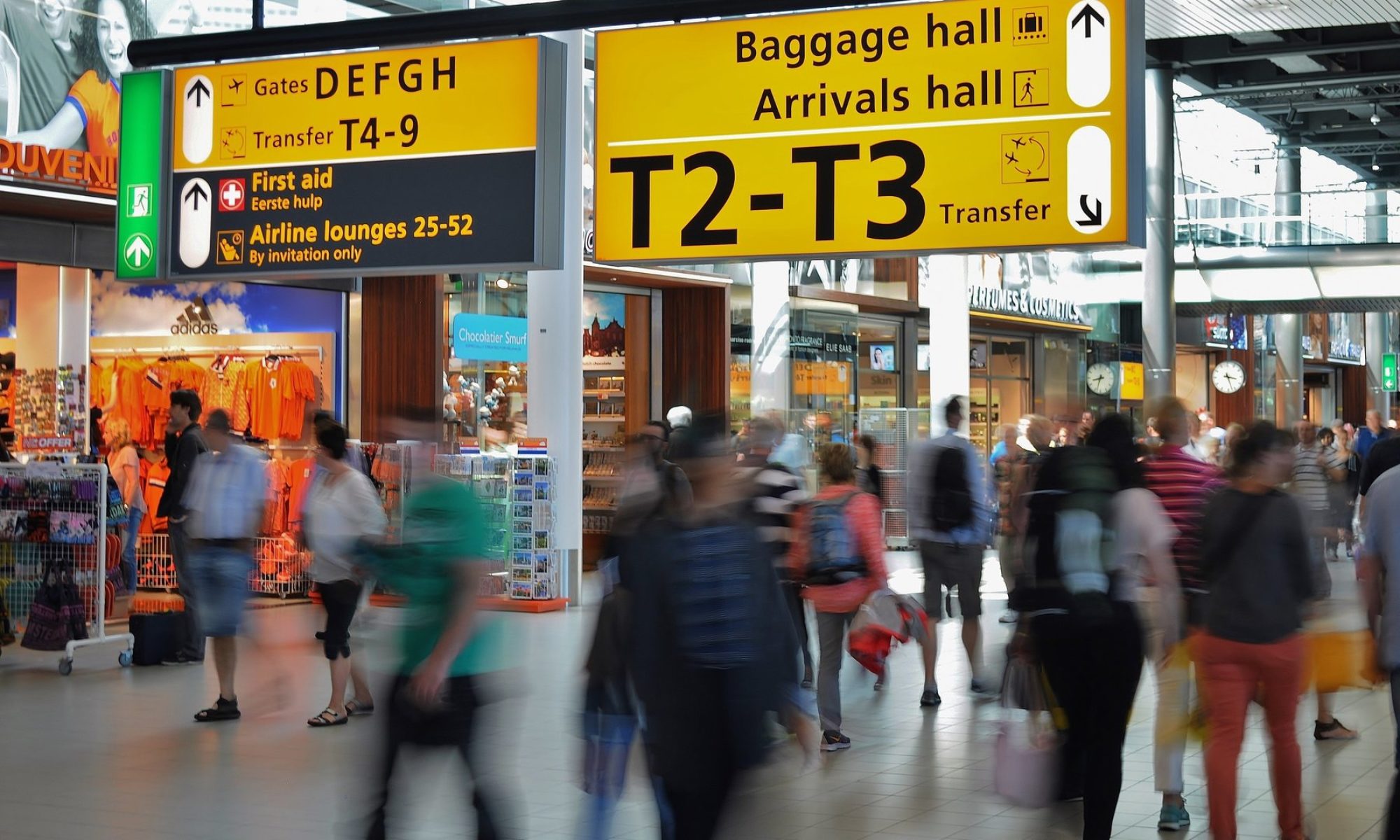


Ottawa international airport: $25-million renovation inside the terminal that will see a new and expanded food court and retail space

Big changes are coming to the Ottawa international airport, with a $25-million renovation inside the terminal that will see a new and expanded food court and retail space, and the relocation of passenger screening to the third floor of the building.

It’s all part of a major, five-year airport transformation that includes a new hotel and a $20-million LRT station. The overall project cost is estimated at $45 million over the next five years.

The work, to be done in phases, will begin next spring with the construction of the enlarged food/retail court and screening facility, which will take 18 months to two years to complete. Airport president and CEO Mark Laroche says successful bids for the new concessions will be revealed next month, followed by contract awards in the spring. Work is to start right after.

The airport also has identified a hotel operator and negotiations are expected to be completed in time for that announcement early in the new year.

Currently, passengers check in luggage with their respective airlines on the third floor, then take an escalator or stairs to the screening area one floor below. Under the new plan, all the restaurants and eateries now on the third floor would be removed to make room for the new security screening facility. The idea is to locate both baggage check-in and security screening on the same floor to improve both security and passenger comfort.

“Everywhere you see a restaurant or retail in the airport, it is going to change,” says Laroche. With passenger volumes rising – up four per cent to five million flyers this year – Laroche says the airport has to keep up with the growth. Besides, the airport is rated as the top airport for customer service in its class in North America (airports handling between two million and five million passengers a year), and Laroche wants to keep it that way with more improvements. “We value customer experience. Customer experience is in the culture of this airport,” he says.

Completion of the first phase would be followed by the construction of the hotel on the south side of the parking garage attached to the airport. The hotel will be built over the next five years.

Design work on the elevated LRT station at the northern end of the terminal is now underway, and construction is to begin once the city signs the Phase 2 LRT contract, which includes the airport spur. The station is expected to open by 2023.

The airport and its ancillary services employ about 5,000 people, contributing more than $2 billion a year to the Ottawa economy. Laroche says the pain of disruption will be worth it once the work is done. “It is going to be an enhanced airport,” he says.

Source: Ottawa Citizen

Kutaisi Int’l Airport to Triple Its Capacity by the End of 2019

The long awaited and much delayed project to expand the Kutaisi Davit Aghmashenebeli International Airport finally has a due date – December 2019.
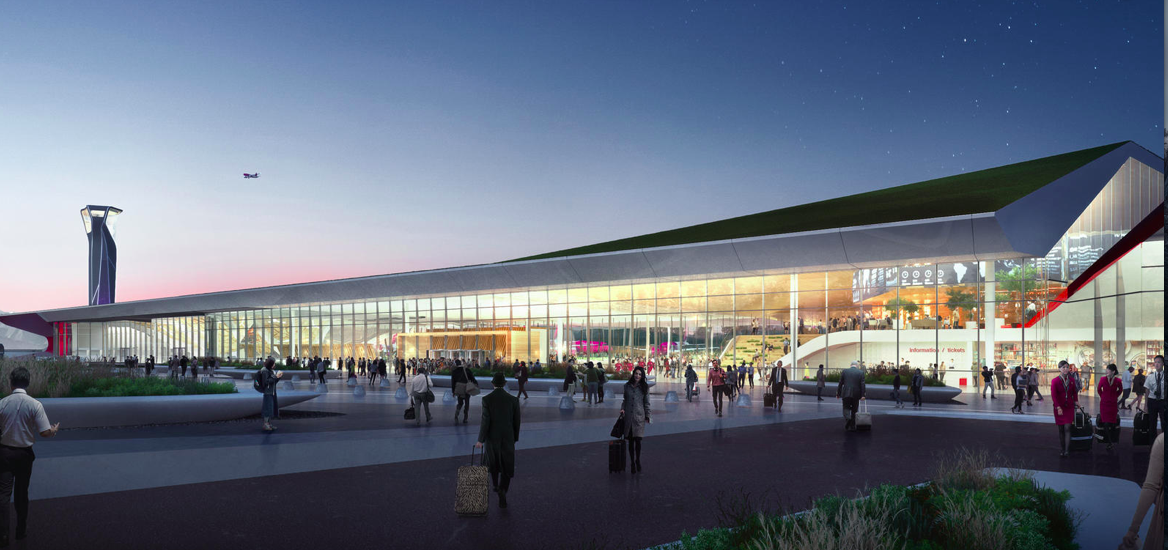

A new passenger terminal is being constructed for Kutaisi International Airport that will be 24,176 square meters – more than three times larger than the current terminal. Saghirashvili told reporters on site that passenger flow through the airport is increasing daily. “We have already served 512,000 passengers in the past 10 months. 52% of them are foreign citizens, traveling to our country for tourism purposes, and the economic effect for the country, which is evaluated using a special standard, has already crossed the 110 million [dollars] mark. That is why the expansion of this airport is planned, and why new flights will be added.”

Saghirashvili recognized that as tourism grows, related infrastructure must develop in kind. He announced that all construction projects at the airport will be completed by the end of next year, including the internal transportation infrastructure.

In its current state, Kutaisi International Airport can accommodate 300 passengers an hour. With the addition of the new terminal, the airport will have seven gates and will be able to accommodate 1,000 – 1,100 passengers an hour. The airport is expecting one million passengers in 2020.

Kutaisi hosts one of the three international airports in Georgia, the other two being in Tbilisi and Batumi. It was opened in 2010 and underwent its first major renovation in 2011-2012. The small airport currently offers passengers a Duty-Free store and two coffee shops. It is rarely used for layovers. Passengers transiting to other parts of Georgia must rely on a few bus companies that regularly service the airport, or flag down a passing minibus. A railway station is being built in front of the terminal, which will connect the airport with Tbilisi, Batumi, and other Georgian cities, as well as leading onwards to Armenia and Azerbaijan.

Since 2012, the airport has made attracting low-cost airlines a priority, which has proven to be a winning strategy, at least in the short term. Wizz Air entered the market in 2012, and links Kutaisi with more than a dozen European destinations.

The design team behind the extension, UN Studio, explains on their website that they “aimed to ensure a user-oriented experience where the health and comfort of every passenger is accommodated through architecture and spatial design.” The design of the original airport, completed in 2012 by UN Studio, was voted among the world’s 14 Most Beautiful Airports by online real estate network Curbed.

Earlier this month, the Georgian Civil Aviation Agency reported that passenger traffic at all three of Georgia’s international airports was up 23% year-on-year in the period from January to October 2018. Serving 512,386 passengers, Kutaisi International Airport saw the biggest increase with 39%.

More than 8 million tourists have visited Georgia so far this year, an increase of 27.9% from the same period of 2017. Georgia is currently the fourth fastest growing tourist destination in the world in terms of year-on-year percentage increase of visitors.

Source: Georgia Today

Los aeropuertos de la red de Aena registran en octubre más de 24,3 millones de pasajeros, con un incremento del 6,5%

  •   El Aeropuerto Adolfo Suárez Madrid-Barajas es el primero de la red por número de pasajeros con más de 5,1 millones (+9,8%), seguido por Barcelona-El Prat con más de 4,5 millones (+8,8%)
  •  Entre enero y octubre el número de pasajeros ha superado los 228,4 millones, un 5,6% más.
  • Los aeropuertos de la red de Aena han registrado el pasado mes de octubre más de 24,3 millones de pasajeros, un 6,5% más que en el mismo mes de 2017.

    El total de viajeros que pasaron en octubre por los aeropuertos de la red fue de 24.326.523. De estos, 17.190.119 viajaron en vuelos internacionales, un 5,1% más que en el mismo periodo de 2017, y 7.069.546 lo hicieron en vuelos nacionales, un 10,2% más.

    El Aeropuerto Adolfo Suárez Madrid-Barajas registró el mayor número de pasajeros de la red, con 5.188.971 viajeros, lo que representa un incremento del 9,8% con respecto a octubre de 2017. Le siguen Barcelona- El Prat, con 4.542.389 (+8,8%) y Palma de Mallorca, con 2.987.793 (+3,8%).

De enero a octubre el tráfico de pasajeros en los aeropuertos de la red de Aena creció un 5,6%, sumando un total de 228.429.704 viajeros.

Puerto Rico: Se prepara la Isla para megacruceros

Ante la construcción de más de 100 nuevos cruceros de mayor tamaño y con capacidad de acoger a más pasajeros, la Asociación de Cruceros de Florida y el Caribe (FCCA, por sus siglas en inglés) reconoce que el sector turístico de la Isla podría beneficiarse de esta economía, no sin antes adaptar o construir nuevos terminales que permitan la entrada de estas megaembarcaciones.

El director ejecutivo de la Autoridad de los Puertos, Anthony Maceira, explicó que trabajan con la futura construcción de un terminal en los muelles 11 y 12 de la bahía de San Juan para poder recibir embarcaciones de mayor tamaño. El proyecto se realizará bajo el establecimiento de una alianza público privada (APP) y esperan que la primera fase se complete en los próximos cinco años. Según se había informado previamente, se prevé que la iniciativa inyecte a la zona una inversión que sobrepase los $300 millones.

“Hay líneas de cruceros que expresamente han establecido que quieren llegar a Puerto Rico para expandir sus operaciones y para esto tenemos que aumentar la capacidad de nuestros terminales”, sostuvo Maceira.

Proyecciones

Por su parte, el gobernador Ricardo Rosselló explicó que buscan convertir la Isla en el “Puerto de las Américas”. Entre las oportunidades disponibles, el primer ejecutivo mencionó que buscan apelar al mercado europeo, por lo que buscan atraer a nuevas aerolíneas que movilicen a estos turistas a la Isla.