
Nassau, Bahamas: Cruise Port Bid Rfp ‘Ready In 2-3 Weeks’

The Government plans to complete a formal bid document for outsourcing management of Nassau’s cruise port within the next two to three weeks, a Cabinet minister has revealed.

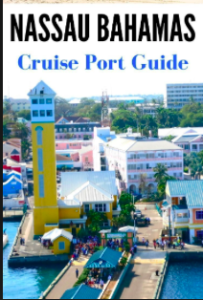
Dionisio D’Aguilar, minister of tourism and aviation, confirmed to Tribune Business that a formal Request for Proposal (RFP) will be issued to transform Prince George Wharf into the cruise tourism equivalent of Lynden Pindling International Airport (LPIA).

Given that the downtown Nassau dock acts as “the gateway for 3.6 million” cruise visitors per year, Mr D’Aguilar said it needed an overhaul comparable to LPIA under the Nassau Airport Development Company’s (NAD) management, which had “not cost the taxpayer a dollar”.

He added that private investors and capital were essential to finance improvements to Nassau’s cruise product, with the Government viewing upgrades to Prince George Wharf as potentially kick-starting development throughout the downtown and Bay Street areas.

Mr D’Aguilar declined to identify the two consortia asked to submit bids, but one of those groups is almost certainly UK-based Global Port Holdings and its Bahamian partner, BISX-listed Arawak Port Development Company (APD), together with investment advisory firm, CFAL (formerly Colina Financial Advisors).

APD made no secret of their interest in its 2017 annual report, revealing that the partners planned to add “additional berths and facilities” to the Bahamas’ busiest cruise port if the Minnis administration gave their project the go-ahead.

Global Port Holdings generated $115m in revenue in 2016, and APD’s annual report said: “In response to the Government’s interest in improving the operational and financial performance of Prince George Wharf, APD is exploring the possibility of a joint venture with Global Port Holdings, the largest global cruise port operator in business today.

“This company is considered the world’s largest cruise port operator with a portfolio that includes 14 ports in eight countries, serving cruise liners, ferries, yachts and mega yachts,” APD said of Global Port Holdings. “Additionally, Global Port Holdings has connections with all the major cruise lines – Carnival, Royal Caribbean, MSC Cruises and so on.”

APD is 40 percent owned by the Government, with the shipping companies and related businesses that relocated from Bay Street in 2011 holding a further 40 percent. The remaining 20 percent is held by public investors.

Data published by the Central Bank shows that despite a 23.7 per cent increase in cruise passenger arrivals from 2010 to 2016, rising from 3.8 million to 4.7 million per annum, total spending has remained stubbornly at $300 million. This is because per passenger spending yields have fallen from $78 to $64 over the same period, a drop of 18 per cent.

Mr D’Aguilar said there were “many other reasons” to improve Nassau’s cruise product, including the 90 new, larger cruise vessels currently under construction, and which all Caribbean ports are now competing to attract.

Source: Tribune242

Chile: Aeropuerto de La Serena será internacional gracias a vuelos de Jetsmart

La línea aérea low cost, JetSmart anunció este martes que inició la venta de pasajes a cinco nuevas rutas entre Chile y Argentina, concretando, de esta manera, su plan de expansión en el Cono Sur.

Las nuevas rutas iniciarán operaciones en diciembre y enero, y los destinos serán Buenos Aires, Córdoba y Mendoza, los cuales serán operados a través de vuelos directos desde la capital y desde La Serena -en el caso de las rutas a Córdoba y Mendoza- convirtiendo así al aeropuerto La Florida en terminal internacional. .

Estuardo Ortiz, gerente general de JetSmart, indicó que “ser los primeros en convertir a La Serena en un aeropuerto internacional nos llena de orgullo, ya que con esto seguimos cumpliendo la promesa de descentralizar Chile y alcanzar una verdadera conectividad regional, uniendo incluso ciudades regionales de ambos países, sin necesidad de pasar por ninguna de las dos capitales, permitiendo ahorrar en tiempo y dinero a nuestros pasajeros”.

Otra de las novedades es que JetSmart operará desde la terminal El Palomar, el cual es el primer aeropuerto low cost de Sudamérica, que cuenta con acceso en transporte público, donde el pasaje al centro de la capital argentina cuesta US$1 en metro. Además, este aeropuerto cuenta con una tasa de embarque reducida de solo US$19.60, permitiendo ahorrar US$30 versus los otros aeropuertos de Buenos Aires.

India to construct 100 airports worth $60 billion

India plans to construct 100 new airports with an investment of close to USD 60 billion (about Rs 4.2 lakh crore) in the next 10-15 years, Civil Aviation Minister Suresh Prabhu said Tuesday.

Amid the country’s domestic aviation sector recording double-digit growth for more than three years on the back of rising demand, the government is working on ways to bolster the infrastructure for the sector.

«We have plans for 100 new airports to be built in India in the next 10 to 15 years with investments of almost close to USD 60 billion,» the minister said at a conference here.

Currently, the Airports Authority of India (AAI) is managing more than 120 aerodromes.

«We plan to put it in the public domain for anyone interested in building infrastructure or airports will get an advanced intimation on where it is going to happen… Our strategy is clear. We have to do it in a PPP mode. We need to have private sector participation,» Prabhu said.

He also said that the government is working on a cargo policy.

The government plans to have a pre-determined tariff structure linked to inflation for greenfield airports.

Currently, there is cost plus tariff structure wherein the rates for an airport are determined every five years, which is known as the concession period.

Against the backdrop of the government proposing a new tariff structure for greenfield airports, the International Air Transport Association (IATA) has raised concerns about it.

The IATA is a global grouping of more than 280 airlines.

«We believe that it makes no sense to fix a per passenger yield at the outset of a concession contract that is set to run for four decades.

«Flexible parameters should be set that are regularly reviewed by a regulator. As we know from bitter experiences in Brazil, Australia and elsewhere that selecting the company that simply proposes the highest concession fee does not yield good long term results,» IATA Director General and CEO Alexandre de Juniac said Tuesday.

The IATA has projected that by 2037, there would be almost 520 million passengers flying to, from and within India each year.

«In 2010, 79 million people travelled to/ from/ or within India. By 2017 that doubled to 158 million. That number is expected to treble to 520 million by 2037,» it noted.

The country is also expected to overtake Germany, Japan, Spain and the UK within the next ten years to become the world’s third largest air passenger market.
Source: The Economics Times. India

Almaty International Airport plans $140 million expansion

Almaty International Airport plans to spend $140.8 million in upcoming years to build a new terminal, reconstruct runways and improve food service.

The airport is the largest in Kazakhstan and was built in 1935. It accounts for half of the passenger traffic and 68 percent of cargo traffic in Kazakhstan.

The airport’s existing Very Important Person (VIP) terminal is registered as a local monument and, therefore, cannot be demolished. As a result, airport authorities have had to consider other options for expansion.

According to Almaty International Airport Vice President Alexander Gordeyev, these options will be approved by 2020.

“There is a need for additional terminal areas, but there is also the issue of land use regulation. That is, there is a part of the land that does not belong to the airport, so this is being addressed at the state level,” the airport’s press service stated. “Overall, the first stage of the airport’s expansion of 40,000 square metres will allow it to smoothly function over the next 20 years.”

The airport’s terminal area has a capacity of 1,600 passengers per hour and is 24,000 square metres, which has been deemed insufficient during the airport’s rush hours.

The airport’s area where passengers access aircraft boarding after border control and inspection has also been deemed insufficient during flight waiting times.

The airport’s airfield capacity is eight to ten flights per hour. To increase this capacity to 20 flights per hour, the airport plans to build two connecting runways and repair its existing runways.

New food service facilities will also be built. The existing facilities were built during the Soviet era. The new facilities will increase food service capacity from 8,000 portions per day to 25,000 portions per day.

“The estimated cost of the airport’s development includes the construction of a new terminal building at 4 billion tenge (US$10.94 million), a new catering department building at 3.5 billion tenge (US$9.57 million), Runway 1 modernisation at 6 billion tenge (US$16.4 million), Runway 2 modernisation at 8 billion tenge (US$21.87 million) and terminal expansion in the amount of at least 30 billion tenge (US$82.02 million),” according to the airport’s press service.

Source: The Astana Times